If you Google Iswaripur, a village of around 300-households in the Namkhana Block of South 24 Paraganas[1], you will find descriptions and images of a a small, peaceful village, known for its “tranquil local community, fishing culture and proximity to the coast of West Bengal” nestled along the Saptamukhi[2] river.
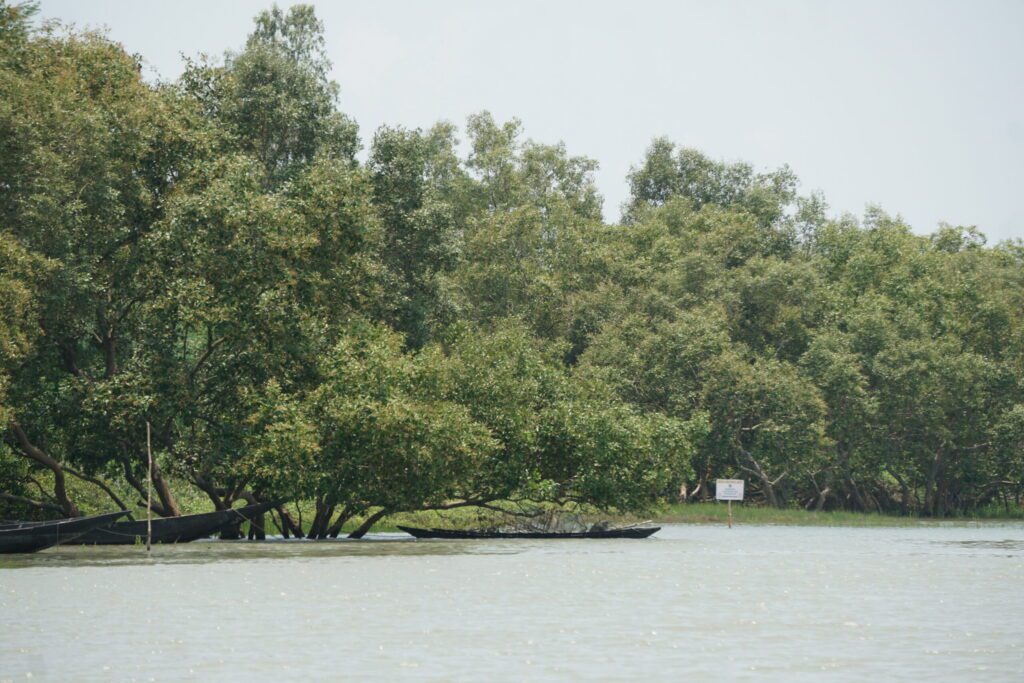
The Sunderbans, with its dense mangroves remarkable bioodiversity and fragile ecosystem is the world’s largest delta . It is also one of the most climate vulnerable zones in India, inhabited by millions of people. While it is widely known as a tourist destination, we drove down from Kolkata to learn about the resilience and hardship of communities who live here. Their daily journey, from a mud house to a flooded field, is not a story of adversity to observe from a distance. It is a matter of survival, every day.
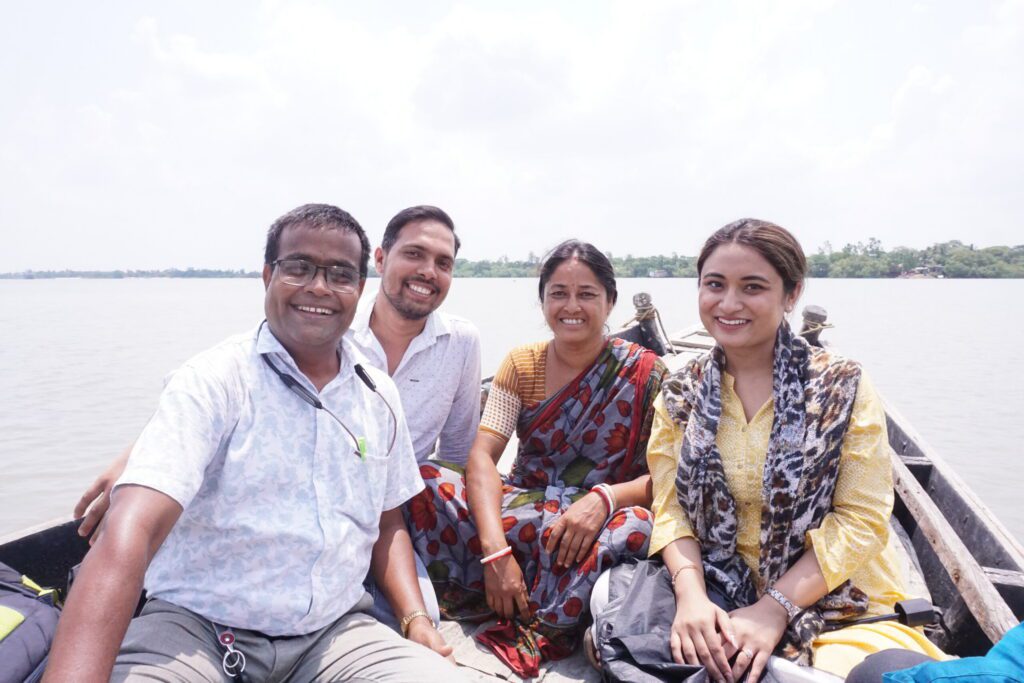
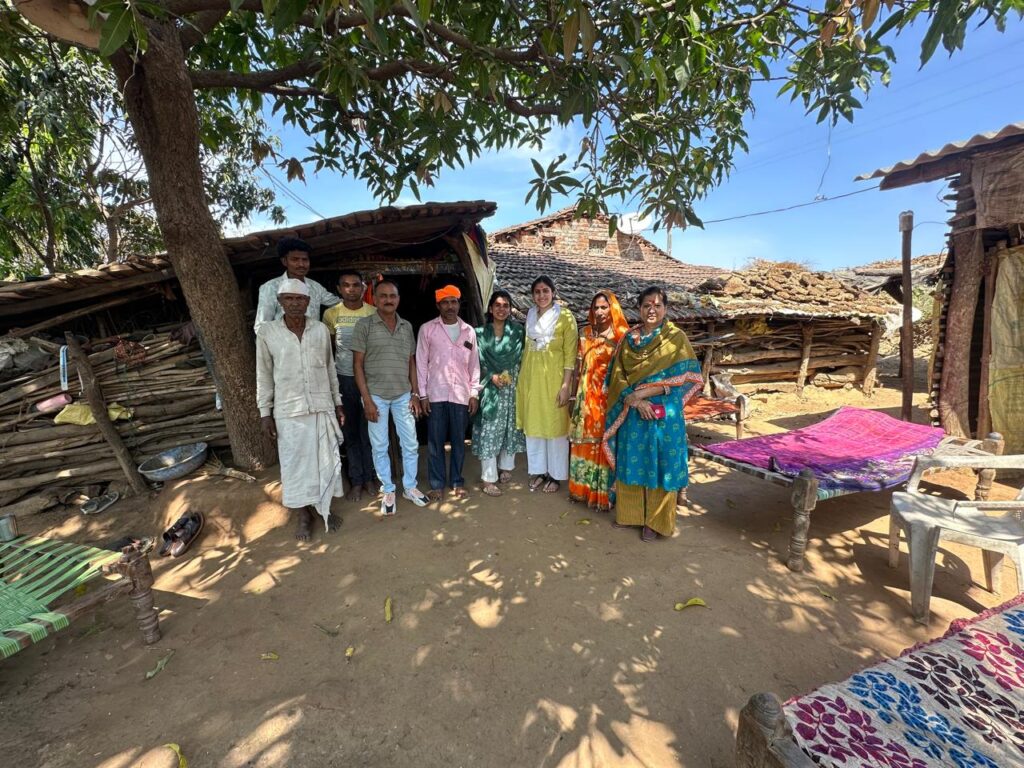
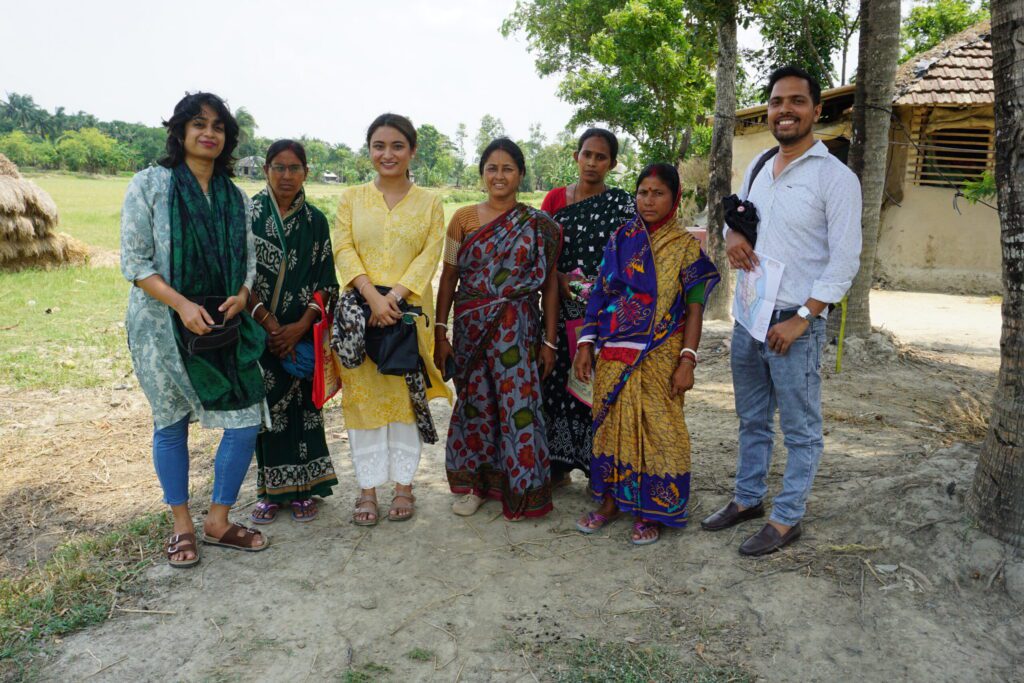
When we met Bashibi*, a woman with a remarkable zest for life and her bold female companions, they walked us through the quiet lanes of Iswaripur. We were not prepared for what they told us. With no proper roads, fragile mud houses, barely any electricity and almost no access to clean drinking water, Bashibi and her neighbours have lived through repeated cyclones, tidal surges and flooding.
In 2021, after a severe cyclone names Yaas, Bashibi climbed a tree with her young grandson and remained there for fifteen days. A snake had taken shelter on a branch above them. Despite the fear, they stayed. There was nowhere else to go.
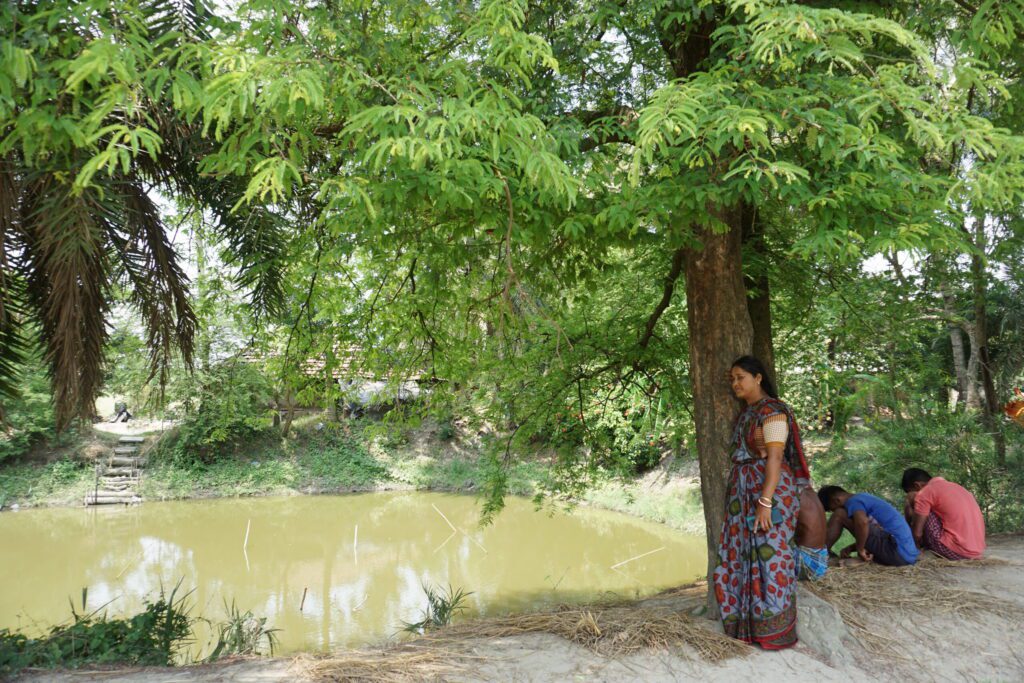
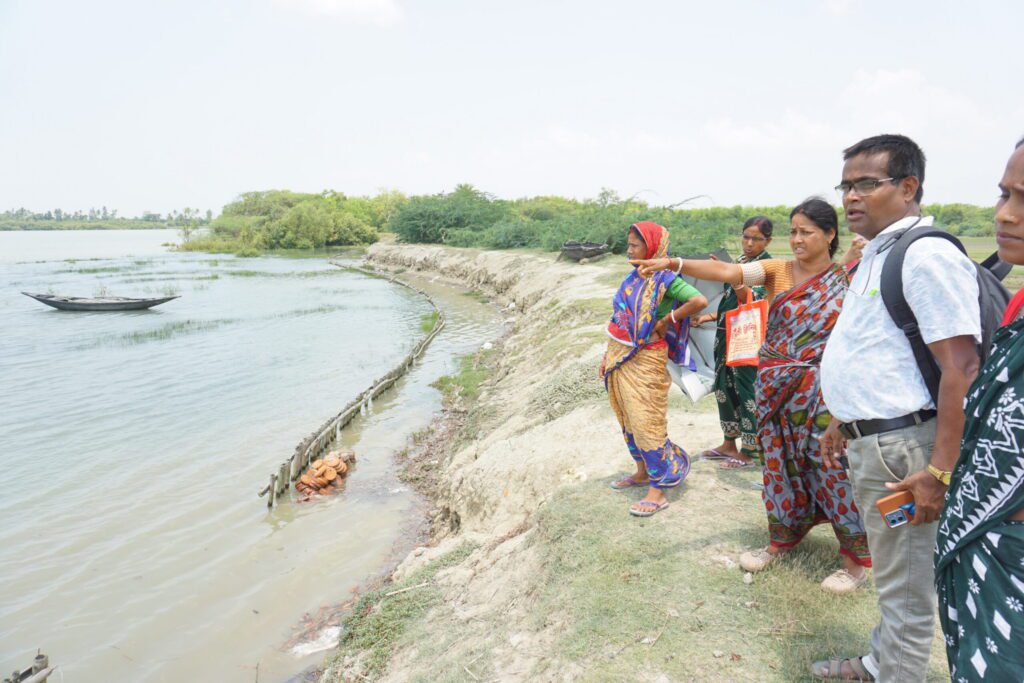
Today, Bashibi stands next to that tree and tells the story with real pride, the kind that comes from having survived something that could have broken you. But the pride does not erase the uncertainty. The embankment at the edge of Iswaripur is eroding. The tidal surge will come again. When it does, the options will be the same: the trees, each other and whatever they can carry.
River embankment erosion remains one of the Sundarbans’ most urgent and least addressed challenges. Each breach redraws the boundary between land and water, disrupting livelihoods, damaging homes, and making recovery increasingly difficult. Addressing it requires sustained public investment and long-term infrastructure solutions, neither of which have kept pace with the scale of the problem.
As outsiders, it was difficult not to think about what more could be done. One suggestion was for Rupantaran to explore partnerships with organisations working on embankment restoration and climate-resilient infrastructure. It was, at best, a modest idea against a challenge that demands far greater systemic attention.
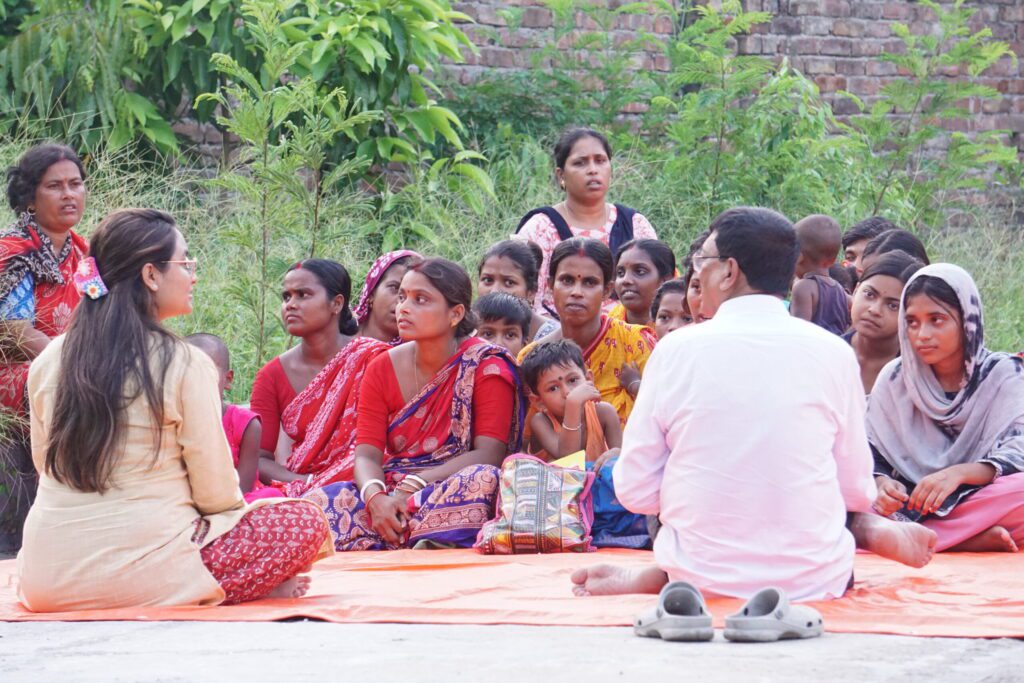
Like Bashibi, Sheeba* is another woman for whom the ground is always, in some sense, about to give way. We met her in Goran Bose, a remote community in the Basanti Block of South 24 Paraganas, close to the Malta river. Surrounded by women and children, she made sure everyone had a cup of tea before speaking about herself.
Sheeba told us that the flooding and destruction caused by a storm had left her and her family homeless on the highway for an entire month. Though she clearly recalled her story and made everyone laugh with her witty remarks as she said it, we were also told she continues to struggle with her health and a persistent lack of livelihood. The laughter, we came to understand, is not denial. It is how you stay afloat when everything around you is collapsing.
Women like Bashibi and Sheeba are not exceptions. They represent thousands of women across this region who have to live with dysfunctional families, domestic violence, boys drawn into gangs , girls married off young because education is unaffordable, and the constant threat of migration and trafficking underneath all of it. These are the communities that Rupantaran Foundation and Goranbose Gramin Bikash Kendra (GGBK), two grassroot NGOs both part of the Rebuild India Fund portfolio in West Bengal, have spent decades working with and learning from.
Rupantaran Foundation
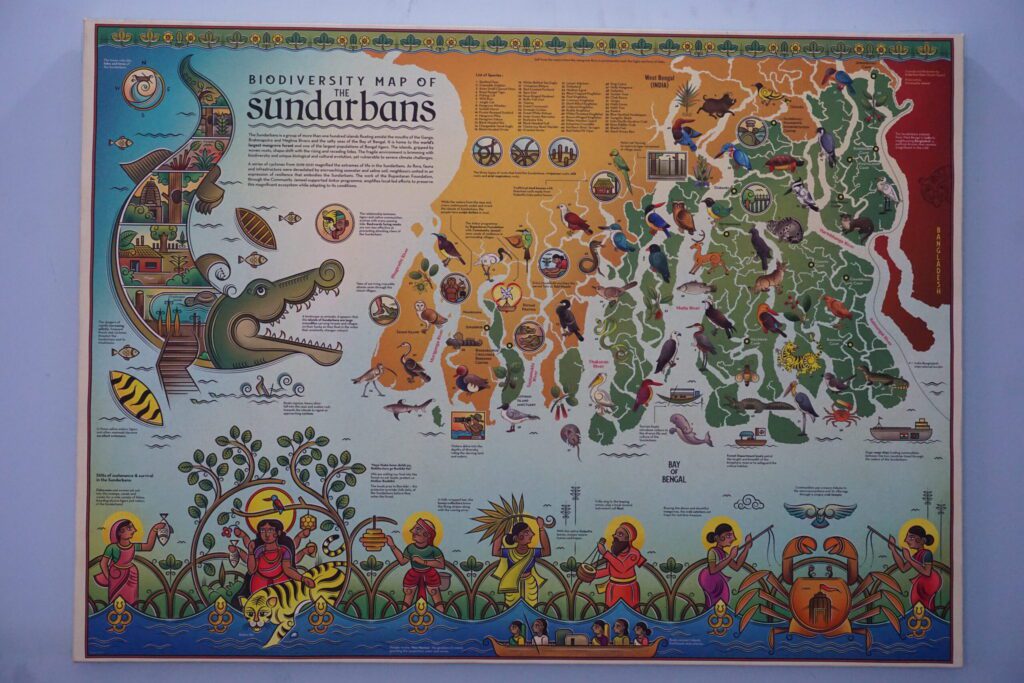
Over the last 15 years of work, through constant learning, adaptation and deep community engagement, Rupantaran has built something that outsiders rarely manage -trust.
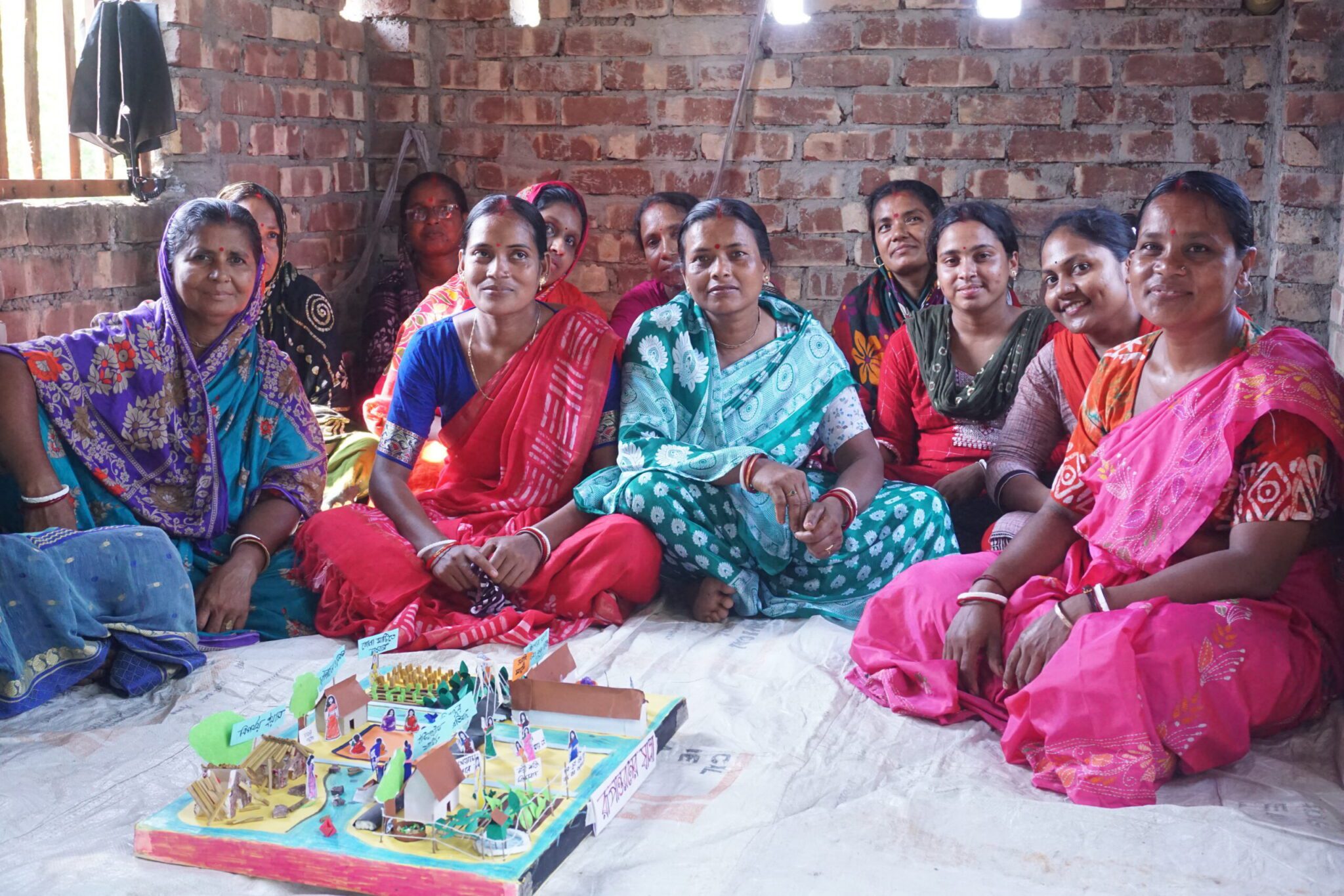
Across villages in Sunderbans, they have created safe peer spaces for young people, trained women in seed farming and multi-cropping, built strong and stand-alone youth leadership from within communities, and enabled women’s farming collectives to grow, not just as farmers working around the problem of salinity in the soil, but as a collective voice against the violence many face behind closed doors.
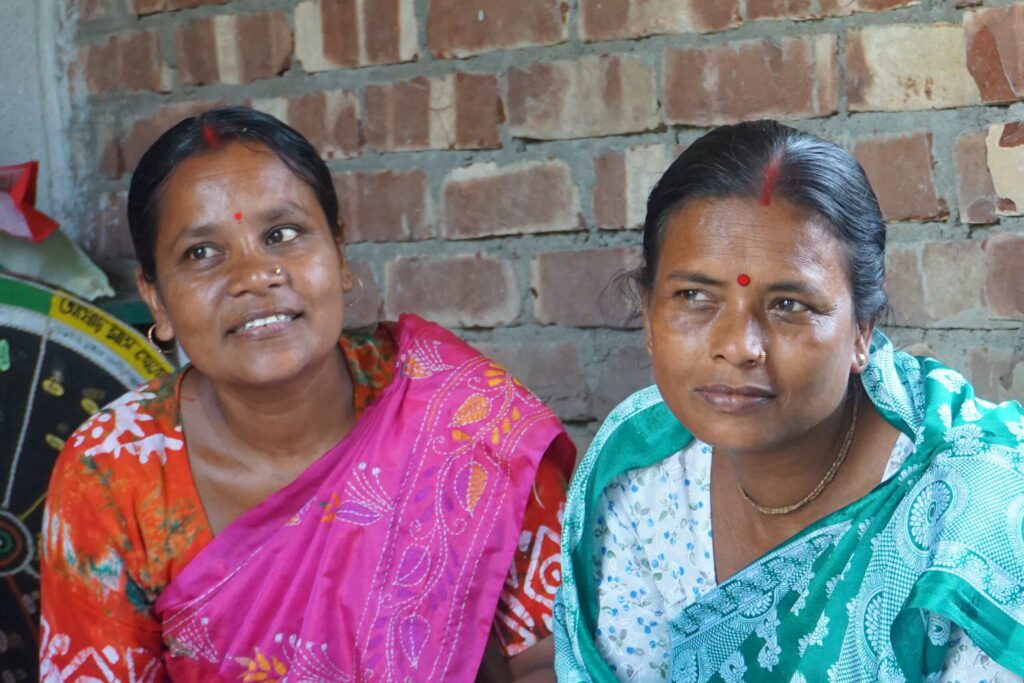
Standing together
A woman in the community had been facing repeated violence at the hands of her husband. Rupantaran did not intervene directly. Instead, when word spread through the village, nearly a thousand women gathered outside the couple’s home. There were no slogans or confrontations. They simply stood together, hand to hand. Faced with the quiet force of an entire community, the husband apologised to his wife.
For Rupantaran, moments like these reveal that climate resilience cannot be separated from questions of power. A village is better prepared for a crisis when women are able to make decisions, organise collectively, and speak without fear.
That understanding emerged over years of working in the Sundarbans. The climate crisis is not gender neutral. Cyclones, flooding and salinity deepen inequalities that already exist. Women who lack identity documents often find themselves excluded from relief and government schemes, not because they are less affected, but because they remain invisible to the systems meant to support them. Without recognition, they have little say over resources, livelihoods or recovery.
A Crisis That Is Not Gender Neutral
It prompted a shift in Rupantaran’s work. Rather than limiting their role to distributing relief after disasters, they began listening more closely to what women in the community were asking for.
Instead of receiving dry rations, many women said they needed seeds. Food aid helped families survive in the immediate aftermath of a cyclone, but two months later, when salinity peaked and relief distribution had ended, livelihoods remained disrupted. Seeds offered the possibility of rebuilding, allowing families to cultivate crops once conditions became favourable again.
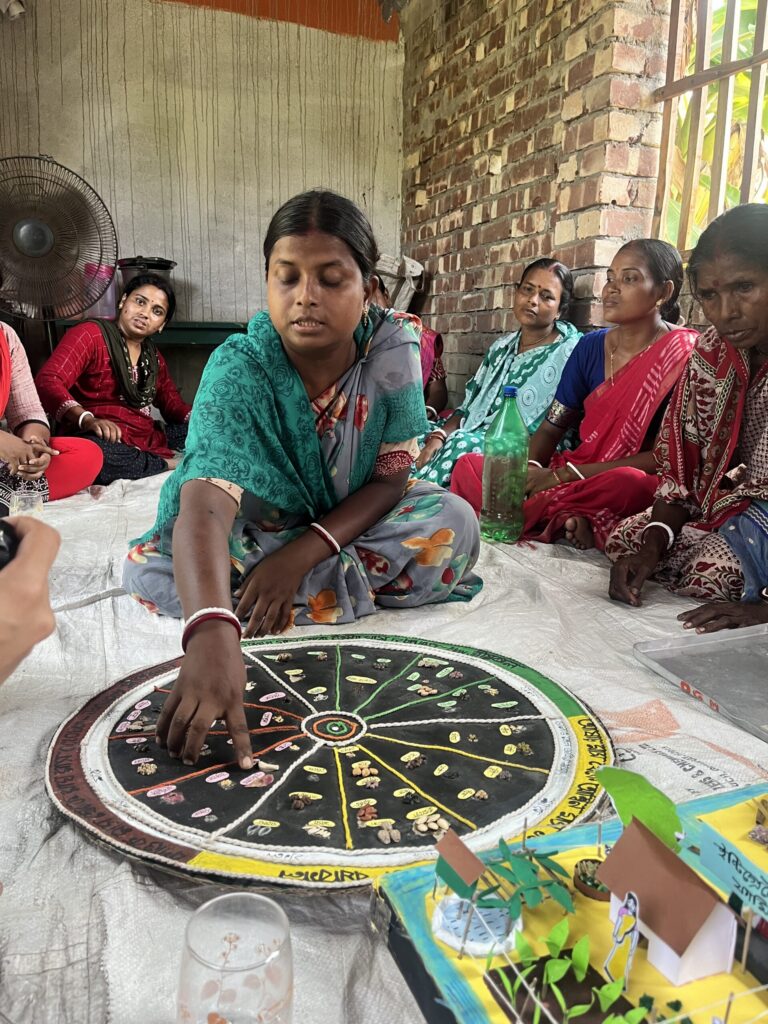
Rupantaran also noticed that men in many villages rarely came to collect relief. Women, however, were consistently the ones managing households and ensuring food reached their families. In response, the organisation began distributing relief in the names of women, recognising them as the primary custodians of household well-being and strengthening their role in decision-making.
The answer lay in building women’s leadership alongside climate resilience, creating networks of women farmers, strengthening access to rights and entitlements, and supporting collective action that could outlast any single intervention.
One memory captures that philosophy. In the aftermath of a devastating cyclone, a woman sifted through the mud surrounding her collapsed home, carefully salvaging onions and vegetables from the only patch of land the saltwater had spared. When the Rupantaran team visited, she used those precious vegetables to prepare a meal for them. It was an act of generosity born from scarcity, but also a reminder that recovery begins long before homes are rebuilt. It begins with dignity, agency and the determination to nurture life, even when almost everything else has been washed away.
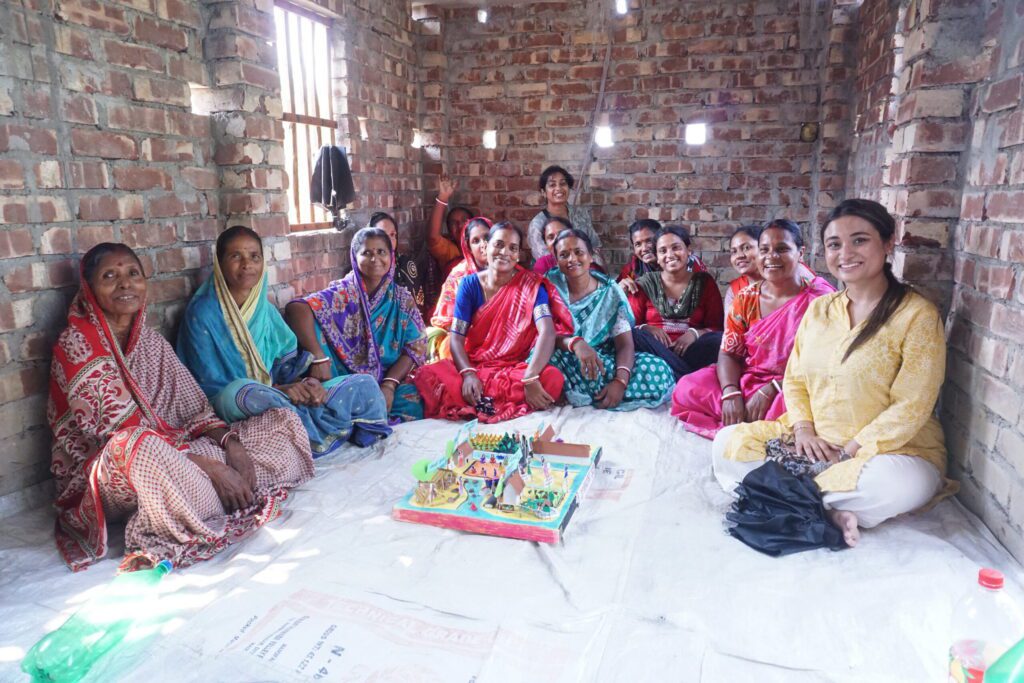
That insight became the foundation of Ankur, Rupantaran’s women’s empowerment programme. The women they met were not asking to be fed. They wanted the means to feed themselves.Women asked specifically for lime powder, a cheap and effective way to reduce soil salinity and grow organic crops. When we visited Patibania in the Namkhana Block, we ate lunch cooked from vegetables grown organically by one of their beneficiaries and it was genuinely the best meal of the trip!
Today, more than 7,000 families are reached through Ankur – with 10,000 women farmers coming together through the programme’s collectives, something unexpected follows: women outside the collectives offer their time through participation and sharing of resources, a true community by definition. One programme had generated another. That is what trust, built slowly and without shortcuts, looks like at scale.
[1] A district in West Bengal, South of the Sunderbans
[2] A river with seven mouths
Goranbose Gramin Bikash Kendra (GGBK)
Driving from Canning (the main railway gate to Sunderbans) to Goran Bose (the village where GGBK started their operations), we noticed something it took a few minutes to name. For 2 whole hours, every house we passed was built directly on the roads cutting across the region. There was no other land to build on!
What we saw as far as the eye could see, was land in the form of grid lines squaring of shallow water bodies. Everything visible beyond that narrow strip was so prone to flooding that no structure could standthere for long. The houses were mud, some brick, none of them strong against a cyclone. GGBK’s own concrete field office took heavy damage from Cyclone Amphan in 2020 and Cyclone Yaas in 2021. These are not distant memories. They are recent events, and the next is a matter of when, not if.
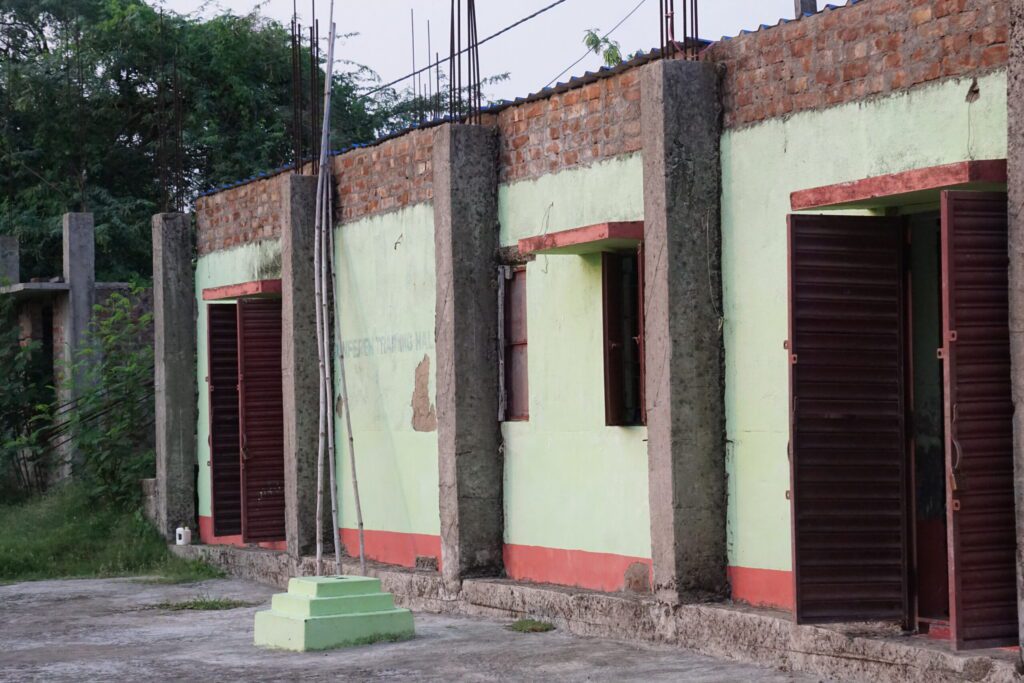
In this stretch of the Sunderbans, close to the Bangladesh border, drinking watter needs to be purchased. Twenty litres costs fifteen to twenty rupees. It is often adulterated, which is why it is cheap and why so many people are sick. Men are hospitalised for tuberculosis. Children are visibly malnourished. Women’s eyes carry a particular kind of exhaustion. There are no hospitals in the region. Transport is unreliable. In an emergency, there is very little within reach.
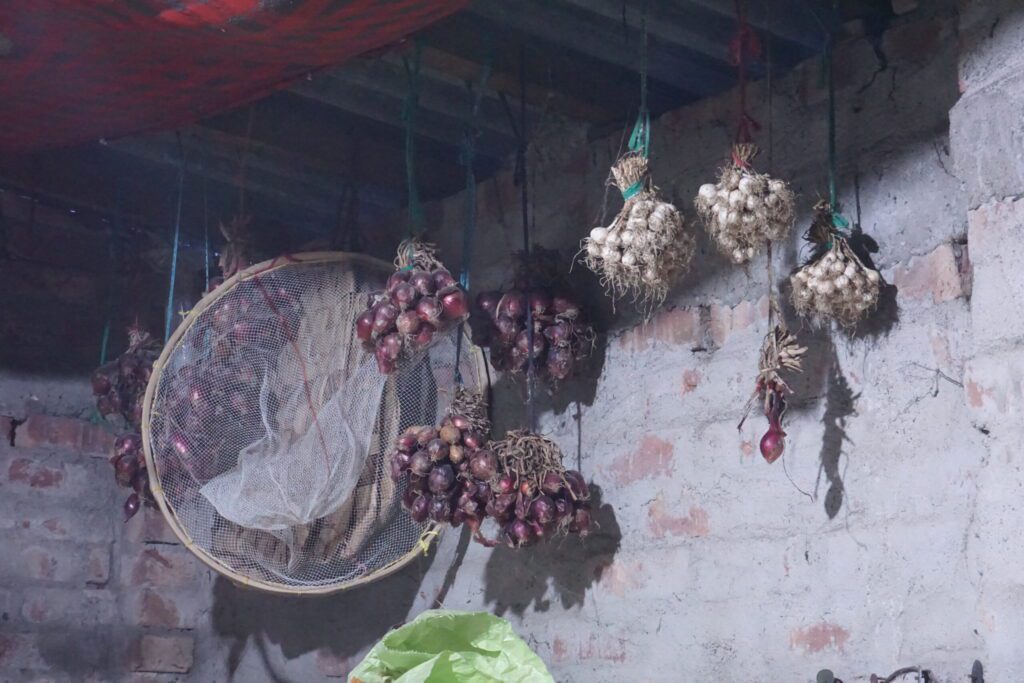
Inside one of the homes we visited, garlic and onions hung from the ceiling. At first, it seemed like an ordinary household detail. It wasn’t. In a place where a flood can destroy everything at ground level overnight, you hang your food where the water cannot reach it. The kitchen is designed around the certainty of flooding. That small detail says something about the weight these communities carry every day, quietly, as a matter of course.
GGBK has been working here for 40 years, and this is the story of just 1 block with 9 islands and 14 gram panchayats. Their work covers more areas towards child protection, women’s empowerment, anti-trafficking efforts, access to justice, entrepreneurship and climate resilience. They have rescued 3,200 girls from trafficking, supported 1,300 survivors of domestic violence, and built a disaster preparedness task force that trains school teachers to protect children during emergencies. Women are making life jackets from plastic bottles. Floating gardens have been built using locally available materials so that rising water works for communities rather than against them. Mangrove nurseries are being grown from seeds collected directly out of the river.
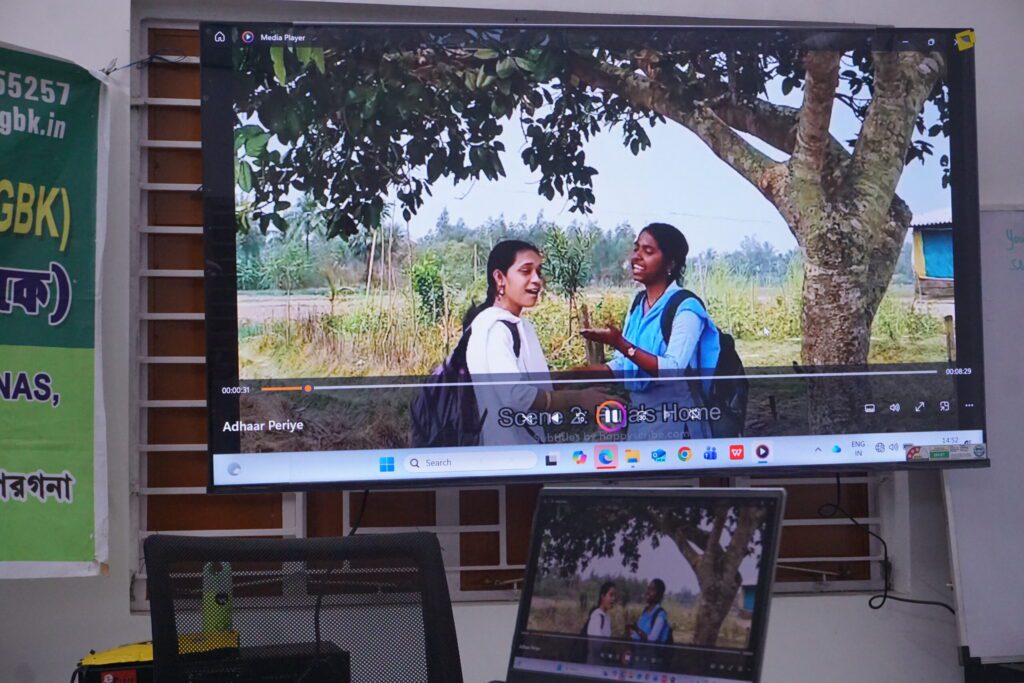
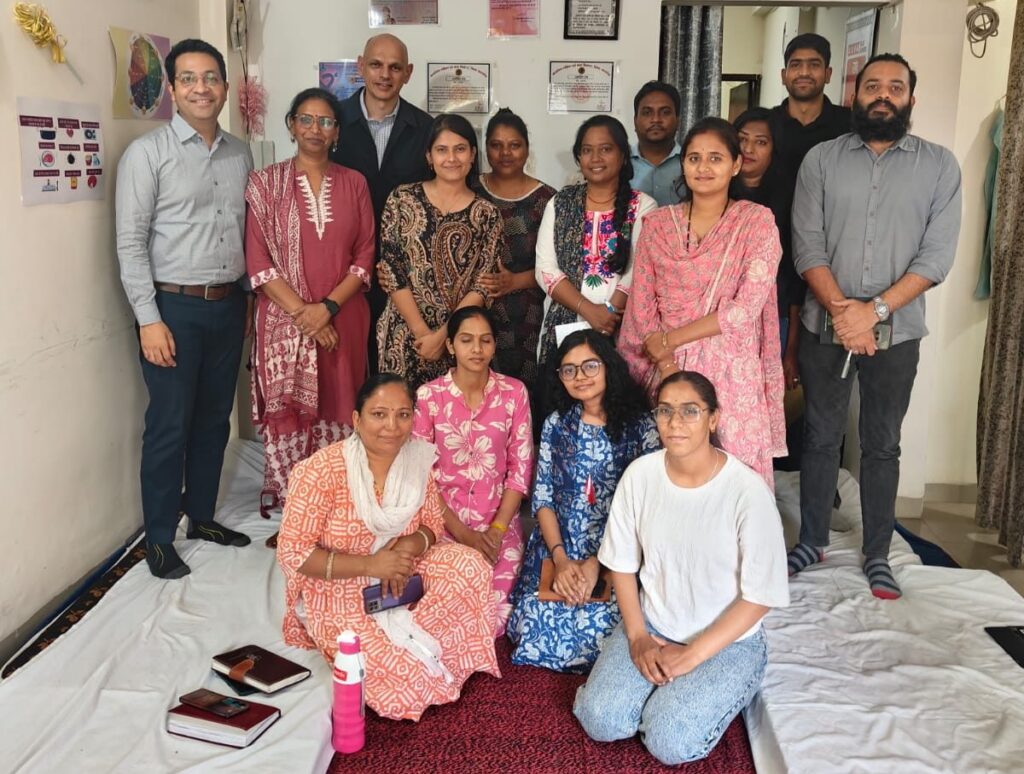
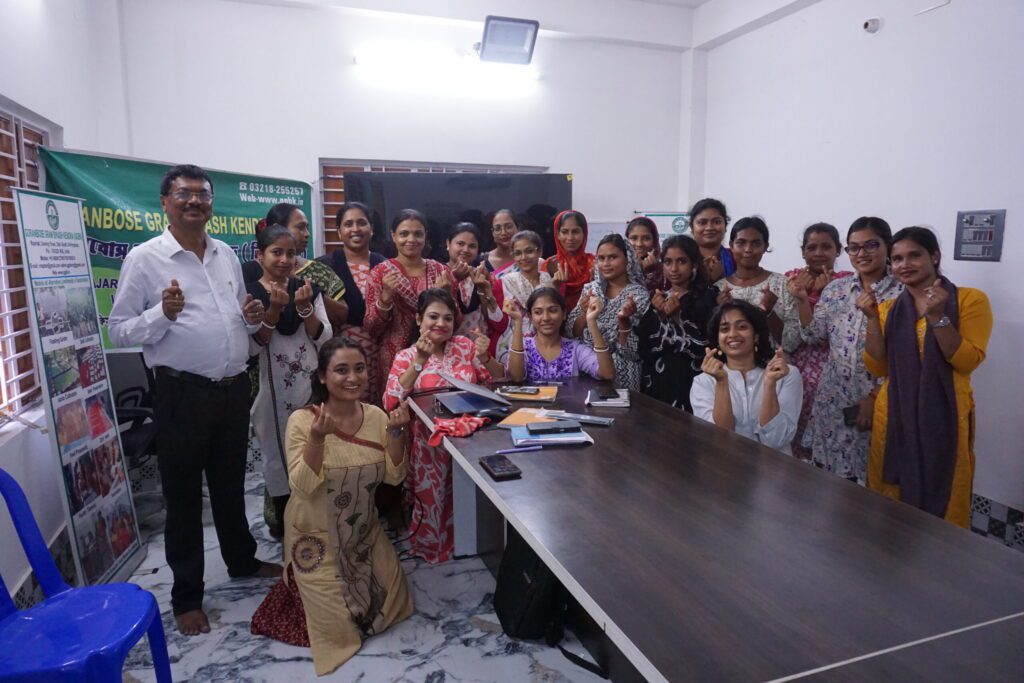
At GGBK’s training and counselling centre in Canning, we met a group of young women who had been rescued from trafficking and are now part of GGBK’s field team, working on prevention and protection for others. They have directed and acted in awareness films on child marriage and trafficking. They spoke with clarity about what happened to them and what needs to change. They are not waiting to be spoken for.
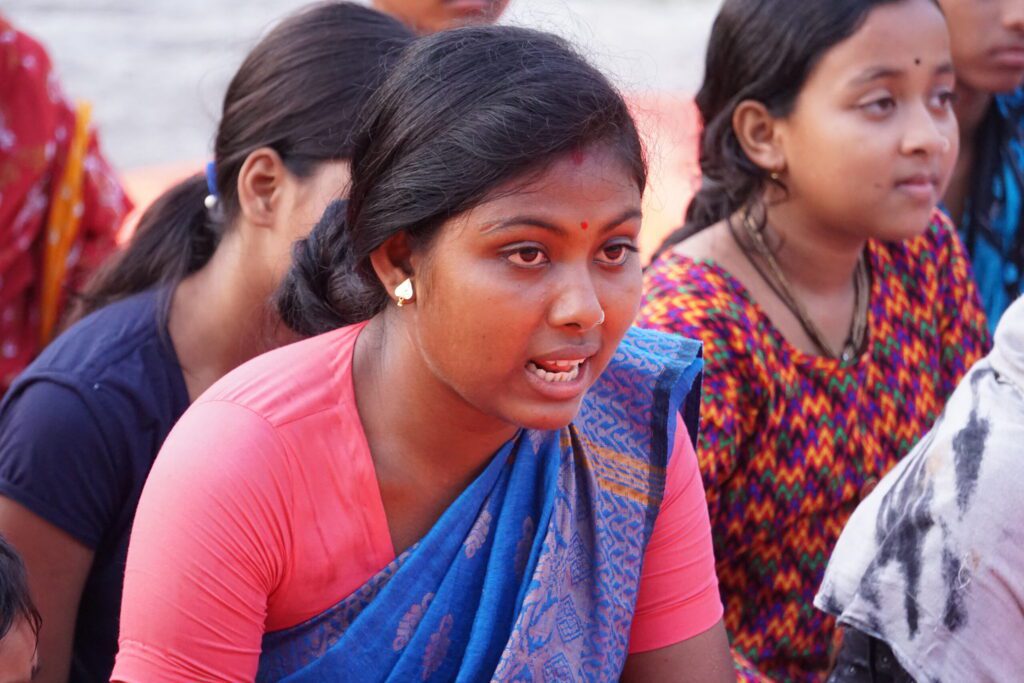
Back in Goran Bose, when we asked the gathering of women what three wishes they would ask for, they answered without hesitation, and in complete agreement with one another: clean drinking water, an end to child marriage, a hospital. The monsoon season was approaching. Their kutcha houses would flood again. And not one of them seemed to be giving up.
What Continues to be Built
Both organisations reject a model where solutions arrive from the outside. Instead, they invest in the leadership, wisdom, and agency that already exists within communities, recognising that the people living closest to the problem are often the ones best equipped to solve it.
Across Pathar Pratima, a block considered backward and severely under-resourced, youth leaders have started climate clubs, intervened at Durga Puja mandals to reduce plastic waste, secured grants from institutional donors, and represented the Sunderbans at international forums. Others are raising disability rights issues with bus unions and gram panchayats, demanding accessible transport and government services by name. Girls are playing kabaddi in half-pants, with printed banners and a proper tournament. Boys are competing in cooking competitions, deliberately and cheerfully dismantling the idea that the kitchen belongs to women. These are not small things in communities where gender roles are tightly enforced. They are movements, built by the people living inside them.
Survivors are training other survivors. Peer educators are becoming staff. Young people are designing programmes, not just attending them. The institutional memory being built here, seed banks, youth-led collectives, survivor networks, disaster task forces, belongs to these communities and will outlast any individual project or funding cycle.
But it would be dishonest to end there. What the Rupantaran Foundation and GGBK have built is extraordinary. It is also not enough, not because of any failure on their part, but because the scale of what remains, an eroding embankment, no clean water, no hospital, no livelihood alternatives after tree-cutting was banned, demands a response that goes beyond what any civil society organisation can carry alone.
The work already underway needs to be matched by sustained philanthropic investment, stronger public infrastructure and long-term government commitment. These are not optional additions to community-led development. They are essential if the progress already made is to endure.
We travelled to the Sundarbans to learn from the communities that call it home. We returned with a clearer understanding of what resilience really asks of people.
For too long, resilience has been treated as something to admire, even celebrate. But behind every story of endurance are lives shaped by recurring floods, fragile livelihoods, and systems that expect people to keep adapting with little support.
These communities do not need more people marvelling at their resilience. They need institutions willing to reduce the burdens that make resilience necessary in the first place. Because resilience should be a foundation to build from, not a substitute for justice, opportunity, or public investment.
Names marked with an asterisk have been changed to protect privacy.